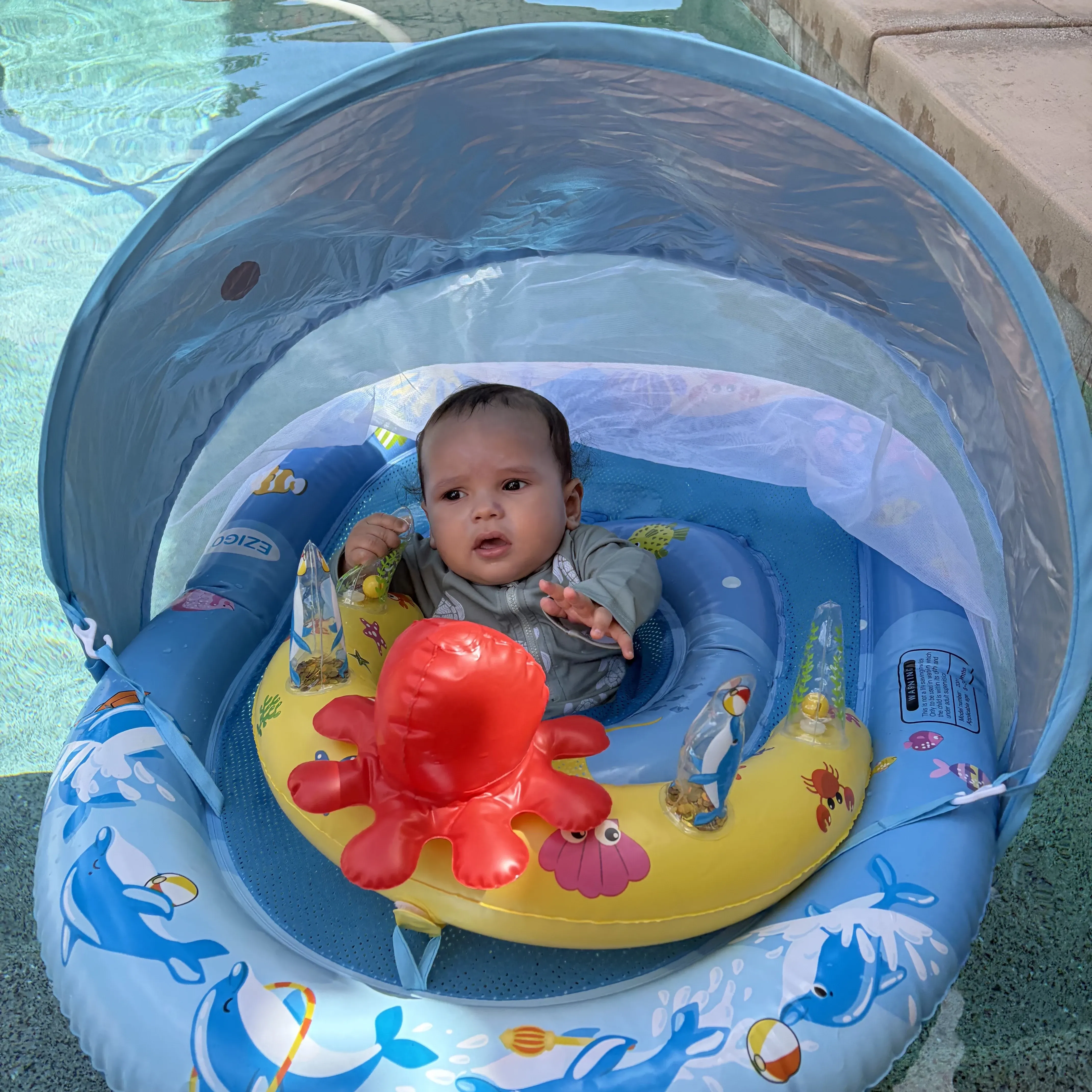
Six months of night feeds, one broken elbow, two very different sleep-training books, and the exact five-day protocol that finally got Noah sleeping through the night. The steps we used.
We got Noah sleeping through the night by moving calories into the day, breaking the nurse-to-sleep pattern, using the same crib response every time, and committing to the full five-night window without caving.
Noah is eight months old now and sleeps twelve hours a night. We are telling you this with the specific, smug energy of two people who spent six months being woken up four to five times a night and genuinely believed it would be that way forever.
He was, to put it generously, a novice sleeper. From the night we brought him home from the hospital, he would wake every ninety minutes to two hours, locate a boob, and fall back asleep only to repeat the entire performance two hours later. For six months we called it love. It was also, objectively, a slow unraveling.
The six-month warm-up act
Before we get to the part that worked, a quick inventory of how we got here. Noah was born in September. From roughly week two through month six he woke up 4 to 5 times a night, every night. Nia, his big sister, slept through the night as a baby with almost no intervention on our part — so when Noah arrived, we assumed this was just how babies were, that we had simply been gifted a different one. Which is true. But we also didn’t realize how much leverage we had.
Here is the thing we did not want to admit for a long time: we were participating in the pattern. Every time Noah made a sound, one of us was at the crib. Every time he wanted a feed, he got one. We catered to his every whim because we were exhausted, because we adored him, and because we couldn’t bear to hear him cry for more than eleven seconds without intervening.
We also, very quietly, tried sleep-training at four months — and just as quietly gave up. A chapter of one book. Two nights of a method. A cave-in at 2 a.m. A promise that next week would be different. Reader: next week was identical.
This is the real lesson, and we’ll put it at the top where it belongs: sleep training doesn’t work if you only do it 70% of the way. Noah was picking up on the 30% and waiting us out every time.
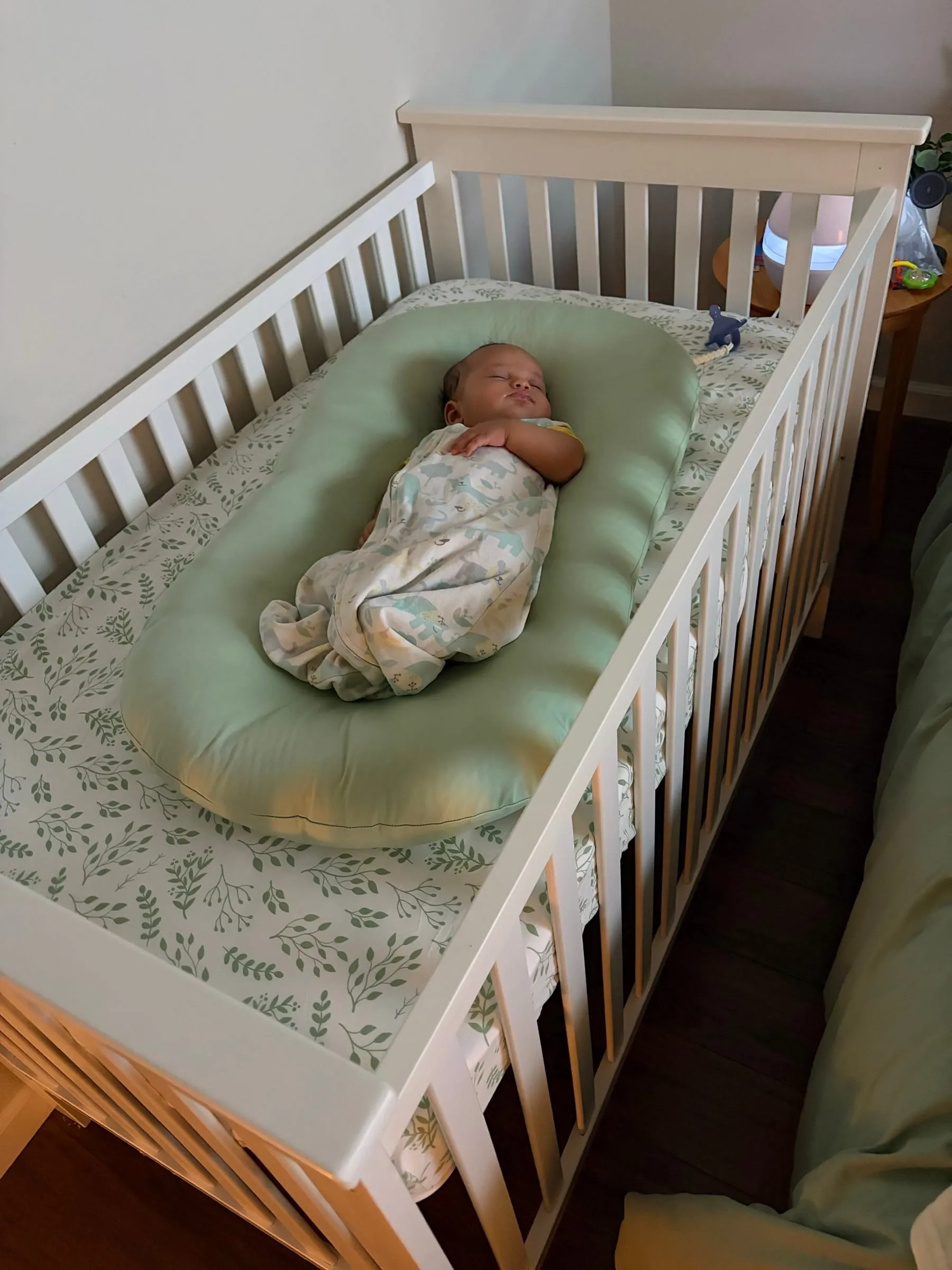
The catalyst: a broken elbow
Here is how we finally committed. Jessika tripped over Noah’s baby bounce chair, threw her arm out to catch herself, and broke her elbow. Clean break. Sling for weeks. Absolutely could not lift a baby in the middle of the night.
Which meant: Theo was the only adult on night duty. And Theo, being a man, very famously cannot nurse a baby.
So suddenly the single biggest lever we had avoided pulling for six months — he cannot have the boob at 2 a.m., because the boob is not in the room — was pulled for us by circumstance. We looked at each other, we looked at the two books stacked on the nightstand that we’d been dabbling in for months, and we said: okay. We’re actually doing this.
“Turns out the missing ingredient in sleep training wasn’t the method. It was both of us being genuinely, all-the-way, no-take-backsies on the same page.”
The two books we used — and why we used both
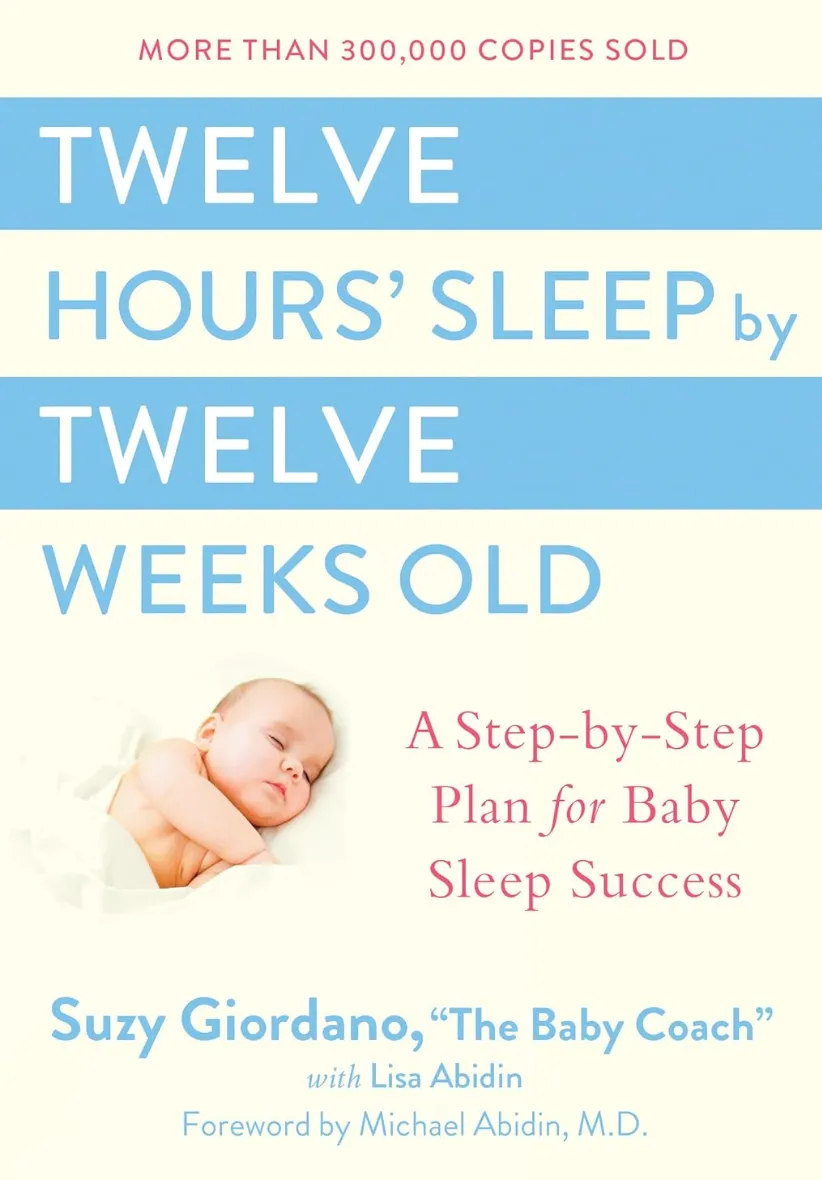
We were not Babywise purists. We were not 12-Hours-by-12-Weeks purists. We took the one piece from each that made sense for us and we used them in combination. Here are the two:
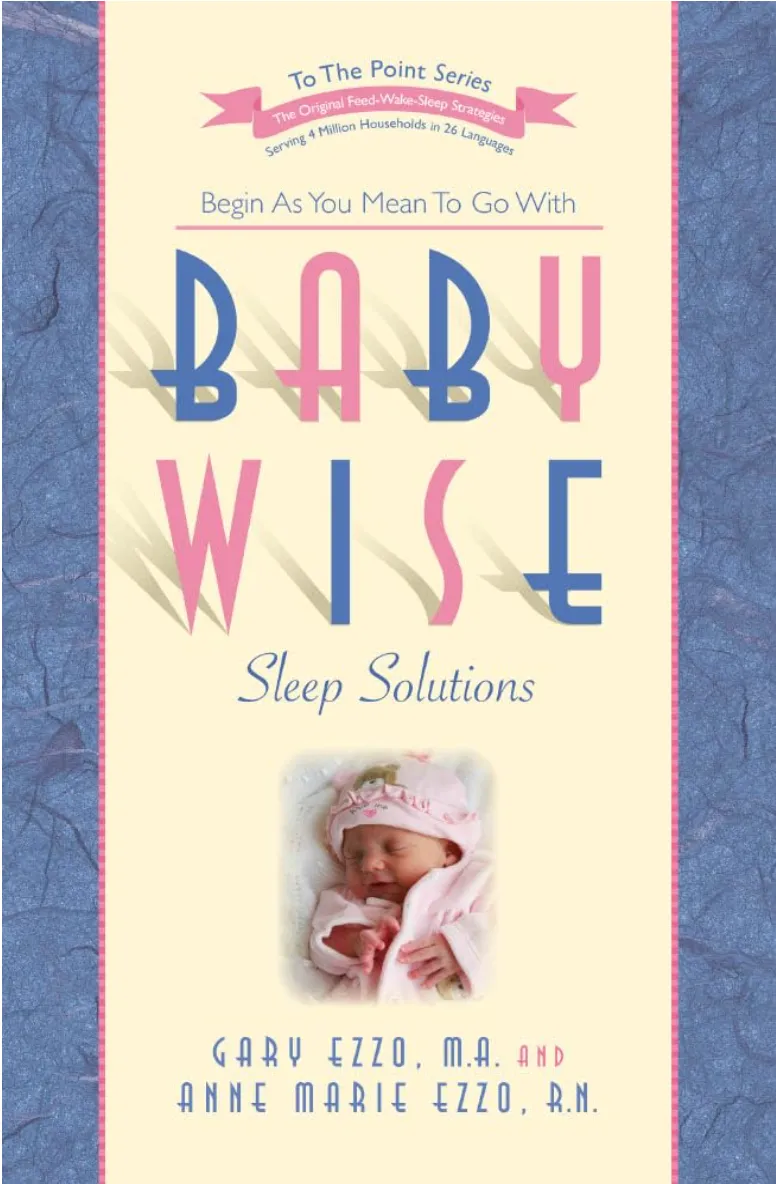
From Babywise Sleep Solutions, we took exactly one thing: the reframed version of cry-it-out that we could actually live with. Instead of walking out and shutting the door, Theo would sit next to Noah’s crib, lay his hand flat on Noah’s chest, and stay there. Noah knew he was there. Noah could feel his breathing. Theo did not pick him up. Theo absolutely did not feed him. The message was: you are not alone, and you are also not getting a snack.
From Twelve Hours’ Sleep by Twelve Weeks Old, we took two things. First, the big one: master the art of getting every single calorie your baby needs during the day. If they’re filling up in daylight, they have no biological reason to wake up starving at 3 a.m. Second: the eat-play-sleep cycle, which decouples nursing from the act of falling asleep. No boob-to-sleep association. No feeding as a sleep aid. Eat, then play, then sleep — in that order — every time.
The comparison we wish we’d had three months ago
| Feature | Babywise Sleep Solutions | 12 Hours’ Sleep by 12 Weeks |
|---|---|---|
| Primary goal | Balanced family life and “Parent-Directed Feeding” | Baby sleeping a full 12-hour nighttime stretch |
| Feeding style | Flexible routine, usually 2.5–4 hour intervals | Strict 4-hour feeding intervals |
| Minimum weight to start | Not strictly defined by weight | Baby must be 9 lbs before the 12-hour goal |
| Nap approach | Heavy focus on nap consistency throughout the day | More focused on the night stretch than on daytime naps |
| Core mental model | Routine as a framework for the whole family | Daytime calories as the path to uninterrupted nights |
| What we kept | Hand-on-chest presence during the crying window | Eat-play-sleep, and the calorie-loading mindset |
Neither book is a perfect fit on its own. Babywise has been criticized in some pediatric circles and is polarizing; 12 Hours by 12 Weeks is stricter on intervals than a lot of families can maintain. We are not telling you to follow either to the letter. We are telling you what actually got our baby sleeping.
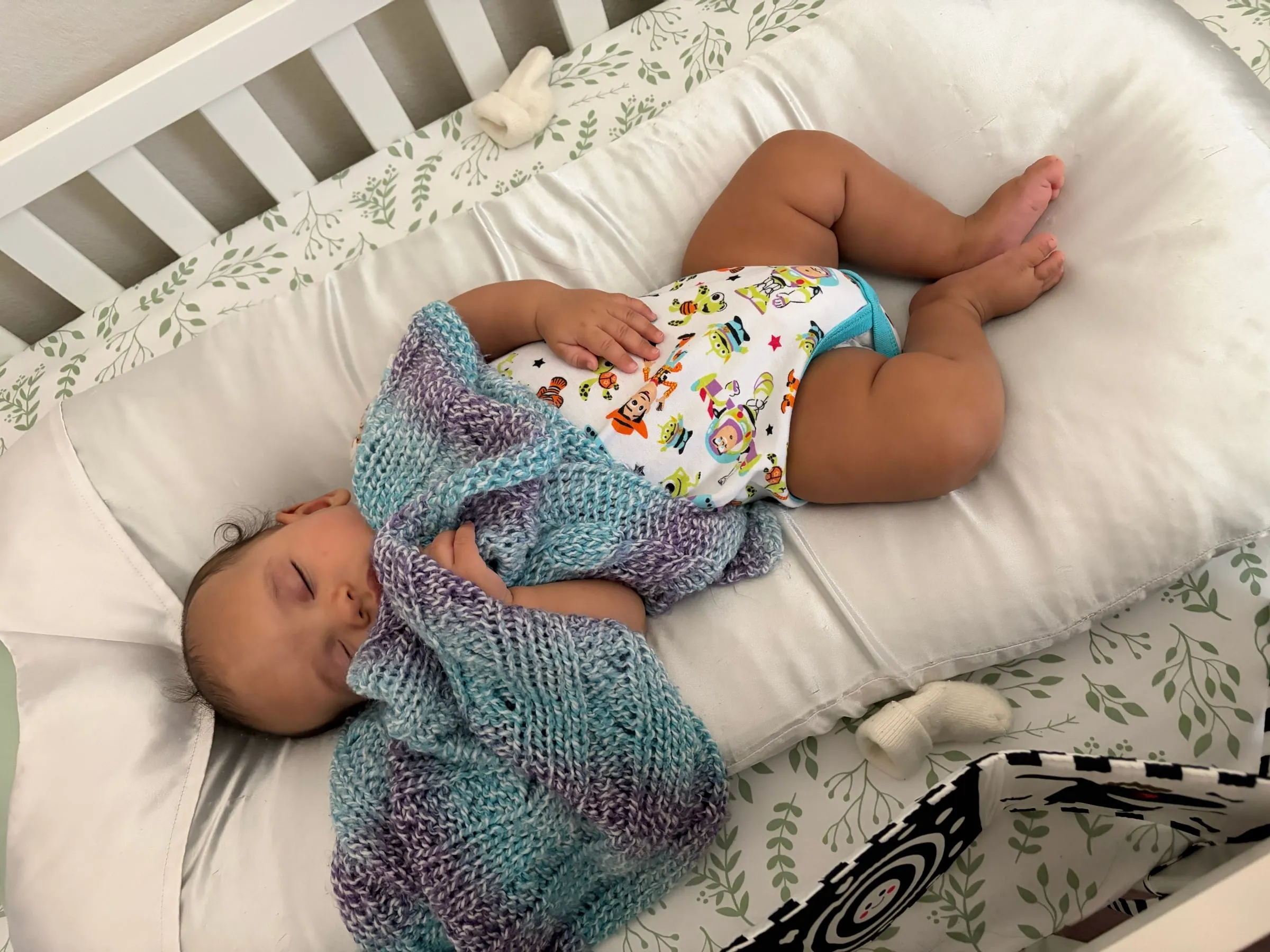
The five days, in order
Night one — the worst one
Jess had the sling on. Theo had Noah. Noah woke up at 11:47 p.m. and asked for the thing he had always been given, which is the boob. The boob was in the other room, attached to a woman in a sling. Theo walked in, put a hand on Noah’s chest, and started humming.
Noah was not pleased. He cried. He didn’t scream — he cried. Theo kept his hand there. Jess, two rooms away, cried her own separate and slightly guiltier cry. This lasted about eighteen minutes. Noah went back to sleep. He woke up again at 2 a.m., and at 4, and at 5:30. Each window was shorter than the last. Theo did not move his hand.
We have a note from that night on Jess’s phone that just says, “we will not cave. we will not cave. we will not cave.”
Nights two and three
Two was easier than one. Three was the turning point. Noah woke up twice, briefly, and both times fell back asleep before Theo’s hand had warmed up on his chest. By morning three we dared to say the thing: maybe this is working.
A quick mechanics note: every single time Theo comforted Noah, he hummed the same melody. Same song, same key, every time. This specific melody, if you’re curious. Theo is convinced — with the unshakable certainty of a man who just survived a week of night duty — that he installed a kind of hypnotic anchor in Noah’s little brain, and that every time Noah hears that song now, something in him understands that it’s time to sleep. Is this scientifically rigorous? No. Does it still seem to work at eight months old? Also yes.
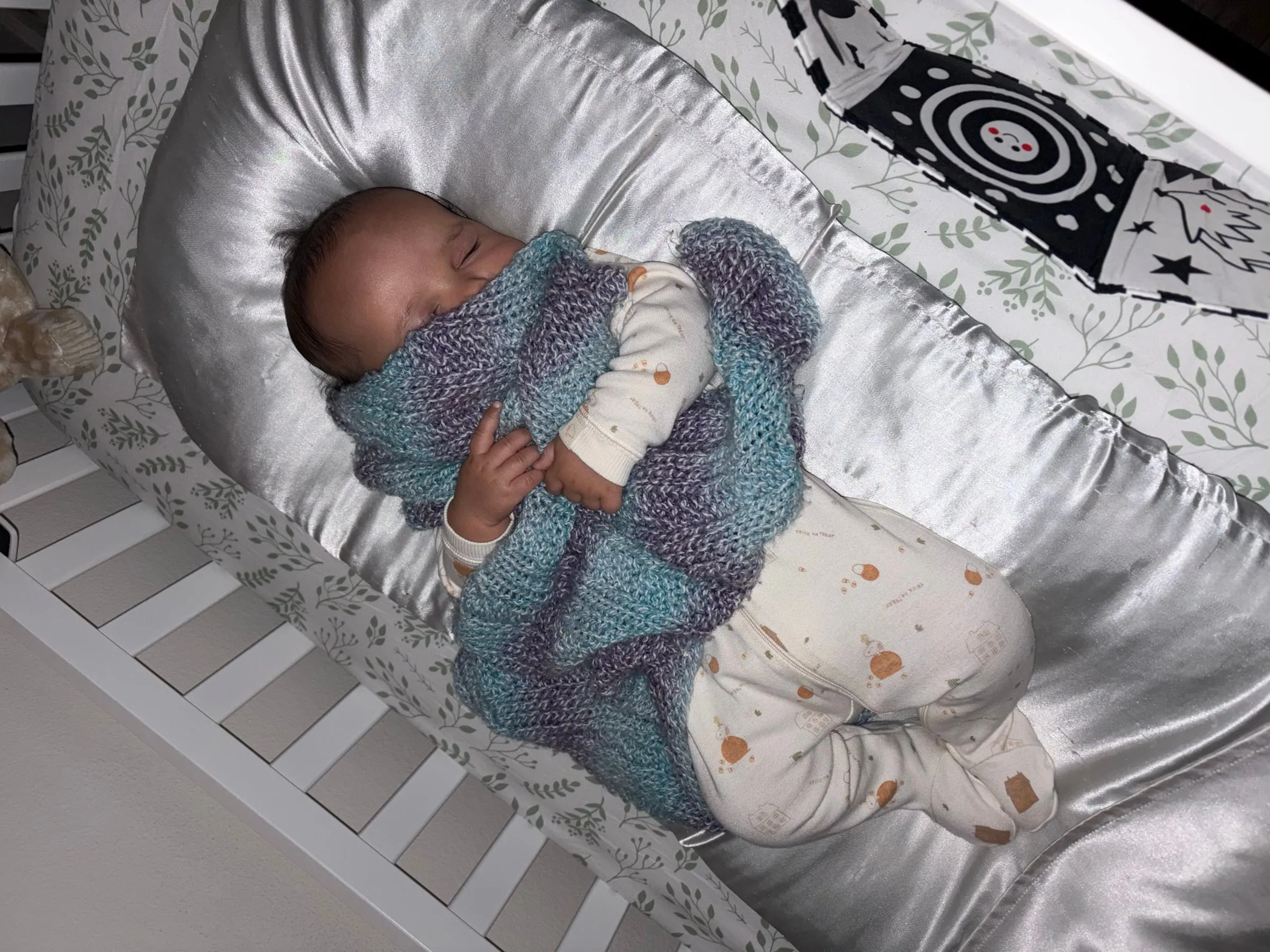
Nights four and five
Night four, he slept from 7:30 p.m. to 5:40 a.m., woke, fussed for a minute, and put himself back under. Night five, he slept from 7:15 p.m. to 6:50 a.m. without a peep. We stood outside his door at 6 a.m. on night five like two people checking a soufflé.
That was it. Five days. We have not looked back.
The exact protocol, if you’re stealing it
Here’s the stripped-down version. This is how we’d run it again, in the order we’d run it.
- Both parents on the same page. Non-negotiable. If one of you is going to cave at 2 a.m., don’t start. Wait a week until you’re both in.
- Load the daytime calories. Full feeds, spaced out, every four hours per 12 Hours by 12 Weeks. If they’re full, the 3 a.m. wake-up has no biological justification. We also do a dream feed every night between 10:30 and 11 p.m. — that’s a quiet, mostly-asleep feed we sneak in before we go to bed ourselves, without fully waking him up — purely to top him off and get him through the morning. We plan to drop it next week. Stay tuned for an update!
- Eat-play-sleep, in that order. Break the nurse-to-sleep link. Feed, then some tummy time or play, then the crib. Every cycle, all day.
- Crib awake, but drowsy. We got lucky here — Noah has always been good at going down awake. If yours fights this step, that’s the one you work first.
- Hand on chest, no lifting, no feeding. When they wake at night, you’re a presence, not a service. Per our reading of Babywise Sleep Solutions, reframed for our own comfort level.
- Same melody, every time. Pick one and stick to it. The point is the association.
- Five nights. Commit to the full window before you evaluate.
- Give yourself two weeks, though. Plan for a two-week window and manage expectations accordingly. If you pull it off in five nights like we did, even better — but most sleep consultants will tell you two weeks is the honest timeline. Planning for two and finishing in five is a gift; planning for five and landing at twelve is a crisis.
Two books, five nights, one household back on the correct side of consciousness.
The questions we kept Googling at 3 a.m.
How do you train a baby to go to sleep?
For us, the answer was not one dramatic bedtime trick. It was making sleep boring and repeatable: full feed, awake time, same tiny routine, same crib, same response. Noah learned, slowly and then all at once, that waking up did not restart the night.
How do you get a baby to sleep through the night without feeding?
The short version: we moved the calories into the day before we removed the night feed. That mattered. If Noah had been hungry, the plan would have been cruel and ineffective. But once he was taking full feeds during daylight, the 2 a.m. feed was more habit than need.
What do you do when a baby wakes up crying in the middle of the night?
Our answer was: comfort, but do not accidentally rebuild the old routine. Theo went in. Theo touched his chest. Theo hummed. Theo did not pick him up, bounce him, turn on lights, or feed him. We wanted Noah to feel safe without making the wake-up more interesting than sleep.
Is sleep training bad for babies?
We are not pediatricians, and we are not pretending this is universal medical advice. For our baby, at six months, with daytime feeds solid and both parents aligned, sleep training was not abandonment. It was a calm, consistent boundary with one of us physically present.
Honestly, the way we think about what we did is that it was closer to feed training than sleep training. The lever we pulled wasn’t “teach the baby to be alone.” It was “make sure every calorie he needs lands in daylight.” Once that was true, the 3 a.m. wake-up wasn’t about hunger anymore, and the whole controversial edge of “sleep training” softened into something much more boring: a baby who’d already eaten.
What changed in the house
Jess is sleeping. Theo is sleeping. Nia, who is nine and who has been narrating the entire saga from the hallway for six months, has declared the whole thing “kind of anticlimactic actually.” Noah, for his part, wakes up every morning at roughly 6:50 a.m. in an excellent mood, blows a raspberry in the general direction of the day, and chews on his fingers until someone comes to get him.
Our marriage is better. Our coffee is hotter, because we finally drink it while it still qualifies as coffee. The red jar of Italian seasoning on the second shelf gets used in actual recipes now instead of being stared at while someone rocks a baby. This is what people mean when they say the nights come back.
If you’re in the six-month fog, we promise this: it can go from unrelenting to over in five nights. Get on the same page. Load the daytime feeds. Pick a melody. Don’t cave.
The two books, one more time
If you only read one, we’d read 12 Hours’ Sleep by 12 Weeks Old for the calorie-loading mental model. If you only read one other one, we’d read Babywise Sleep Solutions for the hand-on-chest language that made cry-it-out survivable in our house. Together they cost less than the melatonin-scented candles we kept buying in desperation. Worth it.
This post contains affiliate links. If you buy something through them we may earn a small commission at no extra cost to you. We only link to books we actually used.

The Family
Our Mixed Pace is written in our family voice: real recommendations, specific stories, and the small house rhythms we want to remember.
Meet the four of usMentioned in this post
Babywise Sleep SolutionsTwelve Hours' Sleep by Twelve Weeks OldThis specific melody, if you're curious.Related faves
Dr. Care Baby Camera & MonitorStylish Sleep SackNoah's Teething PenguinNoah's Badass FloatieFrequently asked
At what age can you start sleep training a baby?
Most pediatricians say four to six months is the earliest reasonable window, once a baby can go longer stretches without a night feed. We tried at four months and failed — not because of Noah, but because we weren't consistent. We succeeded at six months when we fully committed.
What's the difference between Babywise and 12 Hours' Sleep by 12 Weeks Old?
Babywise (by Gary Ezzo) focuses on a flexible eat-wake-sleep routine and balanced family life, with a heavy emphasis on nap consistency and a range of feeding intervals. 12 Hours by 12 Weeks (by Suzy Giordano) is laser-focused on a single outcome — baby sleeping a 12-hour nighttime stretch — with stricter 4-hour feeding intervals and a 9-pound weight minimum. We used pieces from both.
Did you let Noah cry it out?
Not in the pure 'shut the door and wait' sense. We adapted the Babywise approach: Theo would put a hand on Noah's chest so Noah knew he was there, but he wouldn't pick Noah up, and he absolutely wouldn't feed him. There was some crying. It was not extinction. It was hand-on-chest, breathing-together crying — which is a very different kind of night.
How long did sleep training actually take?
Five days. Night one was rough. Night three was the turning point. By night five he was sleeping the full stretch and has been ever since.
What if our baby won't fall asleep in the crib?
Honestly, we got lucky here. Noah has always been good at *going* to sleep — we could lay him down awake and he'd drift off. His problem was *staying* asleep. If your baby won't go down in the crib in the first place, you're solving a different problem than we were, and both of these books address it in different ways.
What is the eat-play-sleep method?
Eat-play-sleep means the baby eats right after waking, has awake time, and then goes down to sleep without feeding as the final step. It breaks the nurse-to-sleep association, which for us was the single biggest lever — once Noah stopped expecting to fall asleep on the boob, the night wake-ups lost their purpose.